For many ADHDers, the instinct to mask their symptoms is strong—whether it’s in the workplace, social settings, or even at home.
Some feel pressure to “blend in” and prove they can function like neurotypical peers. But is hiding ADHD a smart move, or does it do more harm than good? Let’s break down the pros and cons.
Are You Hiding the Most Important Aspects of You?
Jessica McCabe, in her Youtube channel “How to ADHD” so adequately addresses the topic of masking ADHD.
She approaches it from the marathon point of trying to fit into a “normal” world. It was really eye-opening for me to think about young kids who fidget, and then fighting that feeling, forced to sit still in a classroom.
Then it expands to adulthood, still fighting to control all outward appearances and behaviors, stuffing them in a box and wrapping them up tightly for no one to see. This applies not only in the workplace, but relationships, too.
The weird things that we do are normal for our brains… they’re coping and self-regulation mechanisms to help us focus and relieve anxiety.
Jessica McCabe, “How to ADHD”
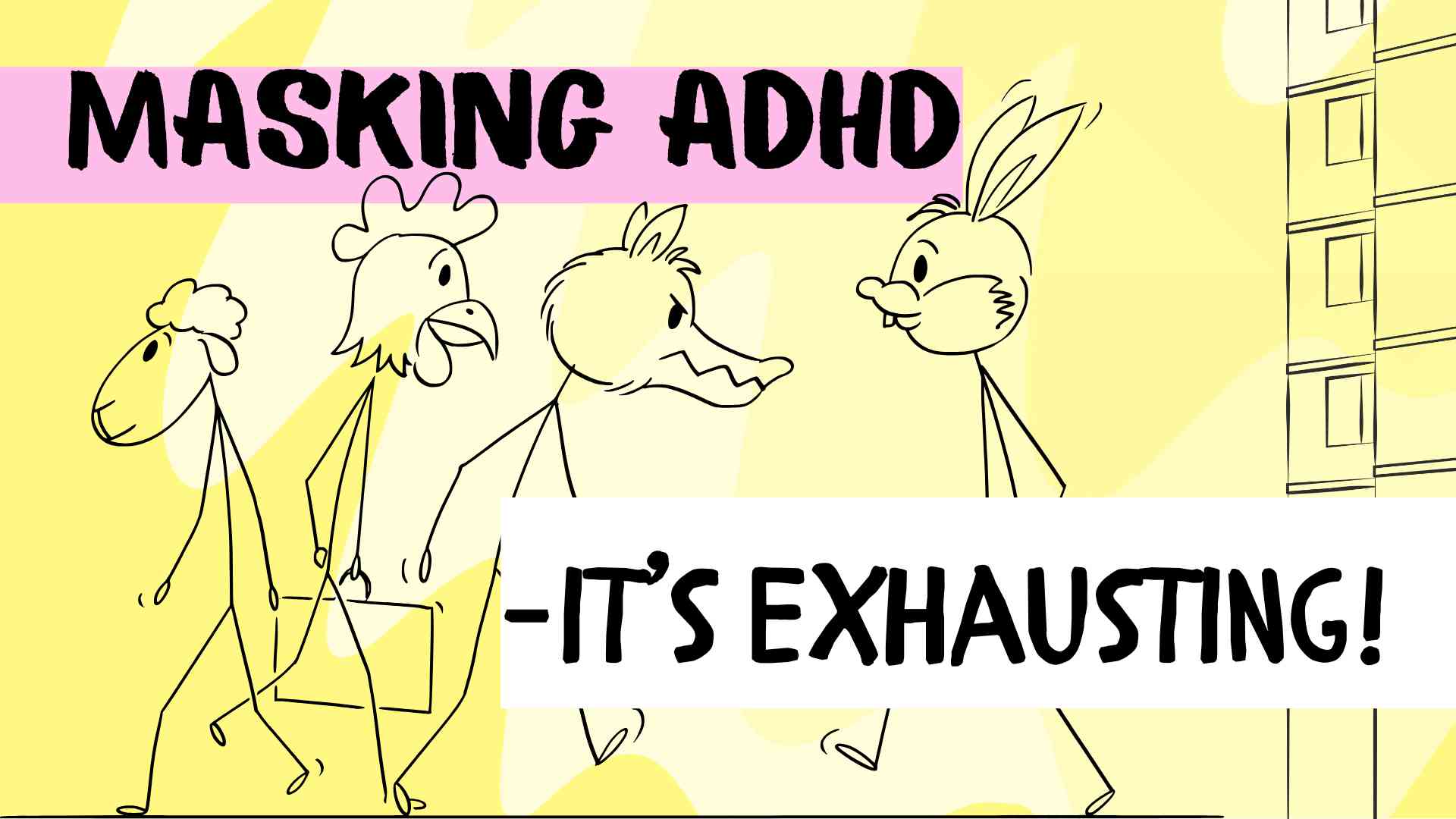
Wow, and then because they mastered the art of masking, they don’t get help because no one thinks they struggle. Even worse, it equates to burnout. Jessica shares that it is exhausting to hide fundamental aspects of who we are.
Jessica does offer a bright side. She’s excited to start seeing a shift in public perception of ADHD. As people start to accept and understand neurodiversity, see unmasked neurodivergent behaviors, and have these behaviors normalized, hopefully persons with ADHD will feel more safe taking off their masks.
Pros of Hiding ADHD
So let’s break this down even more. If you’re hiding ADHD, you probably have your reasons. Maybe you’re even going by a gut instinct that it’s the right action to take. There are also privacy issues, everyone deserves to keep what they want private.
- Avoiding Stigma & Judgment – Unfortunately, misconceptions about ADHD still exist, and some people worry about being unfairly labeled as lazy, unreliable, or overly emotional.
- Career & Professional Protection – Not everyone works in a supportive environment, and some ADHDers fear that disclosing their condition could limit opportunities or invite bias. Read: Disclosing ADHD in the Workplace.
- Sense of Control – Some feel empowered by keeping their ADHD private, believing it allows them to manage it on their own terms without outside scrutiny.
Cons of Hiding ADHD
Maybe you have never thought about the downside of hiding your ADHD. In the end, you will have to weigh out the pros and cons. No one is saying that you must divulge anything. There is an inbetween.
It’s perfectly fine to say, “I struggle a little bit with deadlines, but I will get close.” Don’t hate on yourself in a public litany of your private challenges. You can address one challenge at at time, and reveal as much as you want to.
Consider the toll it takes when hiding your ADHD:
- Mental & Emotional Exhaustion – Masking ADHD takes a lot of energy—constantly forcing focus, suppressing impulsivity, and hiding struggles. Over time, this can lead to burnout.
- Missed Accommodations & Support – Many workplaces and schools offer accommodations for ADHD, but without disclosure, those resources remain unavailable.
- Reinforces Internalized Shame – Hiding ADHD can reinforce the false idea that it’s something to be ashamed of, rather than a legitimate neurodivergence that deserves understanding.
Conclusion
So, what’s the right answer? It depends on the situation. Some people choose to disclose ADHD and embrace their neurodivergence, while others find ways to manage privately. The key is making a choice that prioritizes your well-being, not just the comfort of those around you.
You do you – and be kind to yourself. This is a personal choice. It may also come down to the right timing to share this with others. You may not feel safe in your work environment or a new relationship. Some places of employment are very supportive of workers’ needs.
Hopefully, there will come a place and time, when it feels right to share what you need to share.
#inthistogether -Renee