If keeping track of receipts feels like an overwhelming mess, you’re not alone! For those with ADHD, traditional organizing methods often don’t work because they rely on rigid systems that don’t accommodate fluctuating attention levels. The trick is to create a system that works with your brain, not against it.
Here are some strategies to help you take control of receipt clutter without the stress for both a personal and business level.
Go Digital Whenever Possible
Physical receipts can be frustrating to manage, so reducing paper clutter is key. Use apps like Evernote, Google Drive, or a dedicated receipt-scanning app to snap a quick photo of each receipt. Some banks also offer digital receipts for transactions—opt in when you can.
If keeping receipts for budgeting is a priority, apps like Mint or YNAB can automatically track expenses, reducing the need for manual organization. Some stores also offer email receipts—sign up for digital versions so there’s less physical paper to deal with.
In some instances, skip the receipt. You will have to decide if you need that gas receipt every time – some people do for business purposes.
If you receive a receipt in your email, make a folder just for that! If you need a paper copy, it’s only a click away.
Use Drop Zones
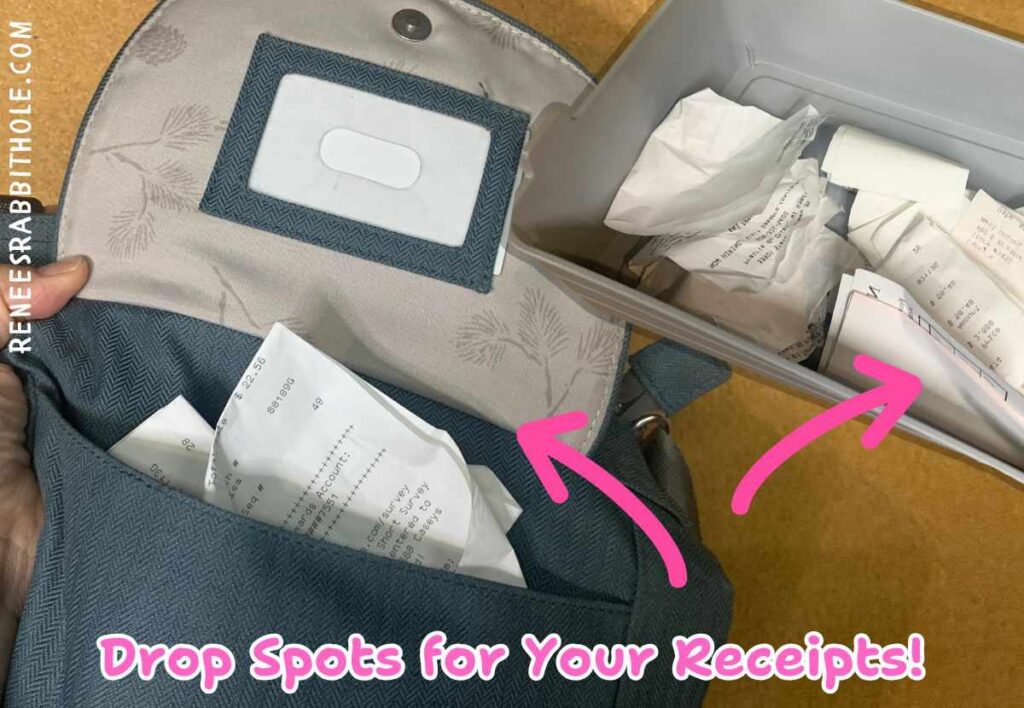
If neatly filing receipts seems impossible, embrace a simple designated “drop zone” instead. This includes the first point of contact: when you’re out shopping. I cover in my purse organization article that I designate a zone in my purse just for receipts.
Guys, get those receipts into your wallet! Avoid those random clothing pockets that end up going through the wash! Drop zones could be a basket, folder, or even a drawer where all receipts go at the end of the day.
This eliminates the stress of sorting in the moment while keeping everything in one place until you’re ready to organize.
My receipts all eventually get filed into spiral bound pocket organizers (see further below). Over the years, I have found this to be the easiest system to maintain.
Use Yearly Pocket Organizers
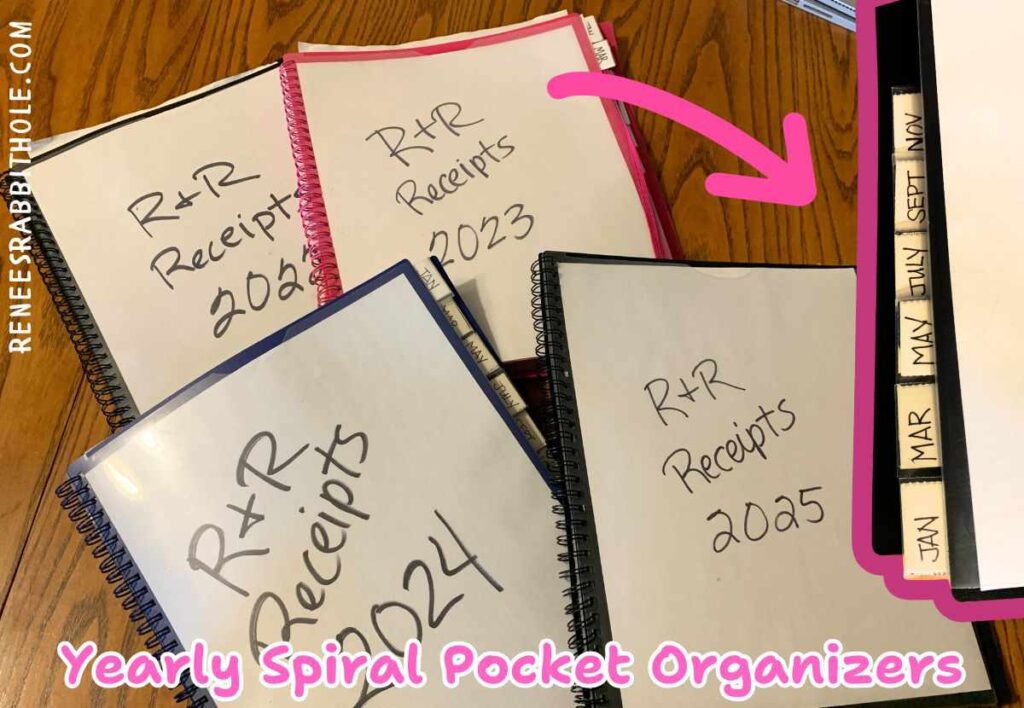
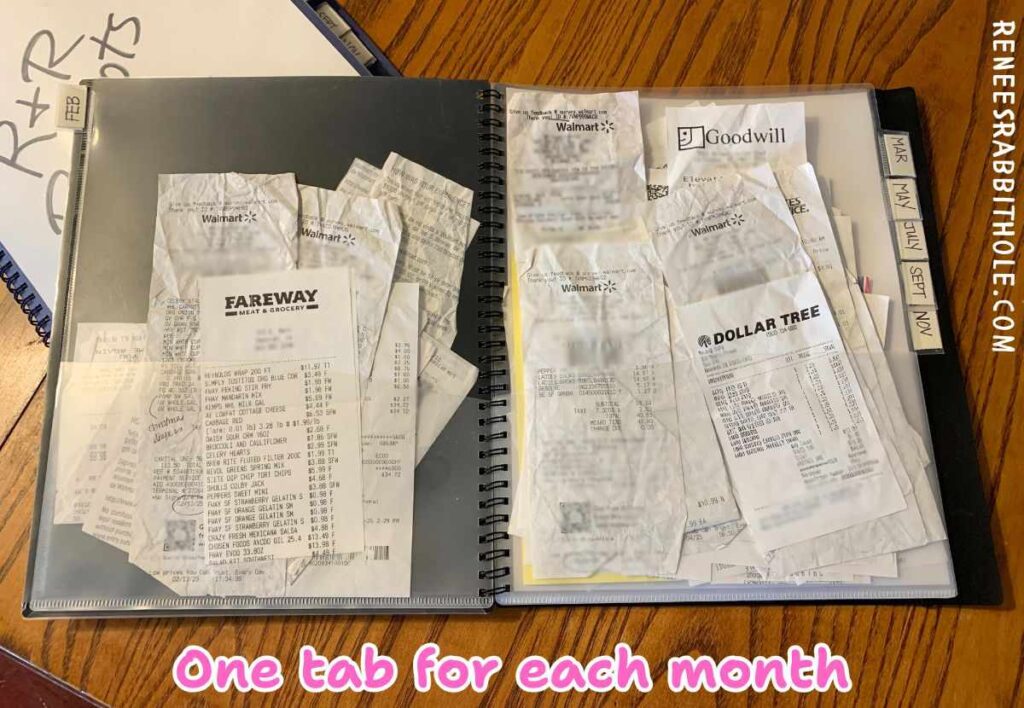
After years of disorganized receipts, I discovered 6-tabbed spiral pocket organizers at Walmart. They don’t seem to carry these inexpensive ones anymore (sad face). Each pocket contains a month.
Here are sources on Amazon to get spiral bound pocket organizers with tabs.
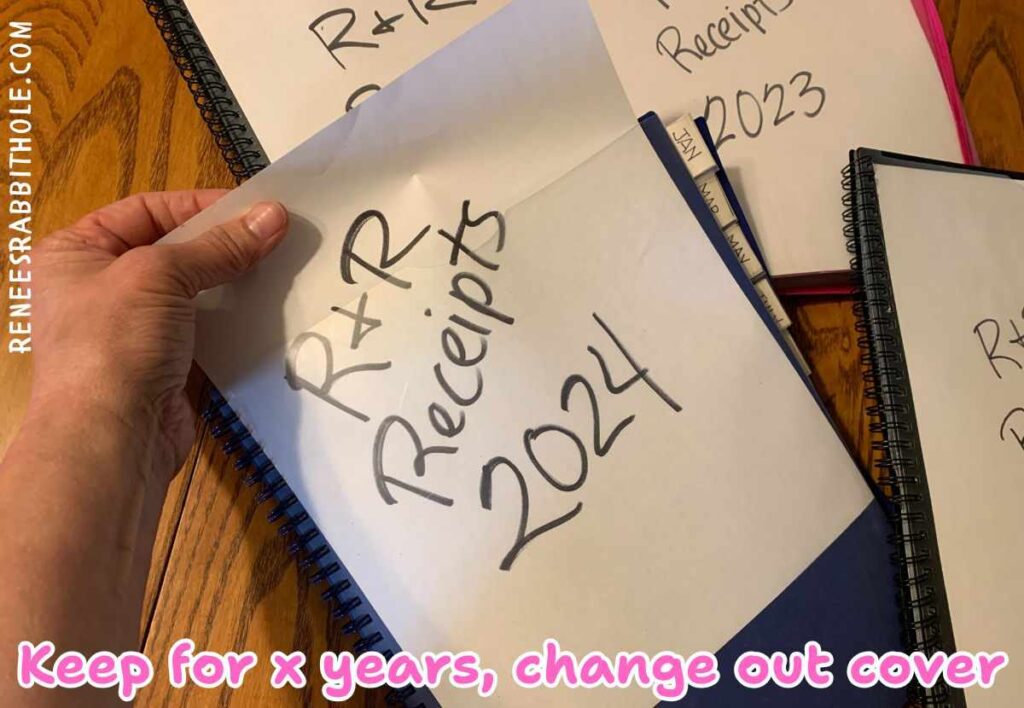
My sweet spot for personal use is to keep these for 4 years. These are re-usable. I just switch out the cover when the next year comes and dump out all of the receipts from four years ago – but you do you.
For our family business, I keep ONE pocket organizer. There is a drop zone box that workers put receipts in, but there is also one of these pocket organizers for the bookkeeper (that would be me and my daughter-in-law!).
When we get the credit card statement, the receipts are matched up and stapled to the statement. If the receipt came from a business check, the receipt goes into the FOLDER SYSTEM (see below).
Use 2-Pocket Folder System for Deposits & Expenses
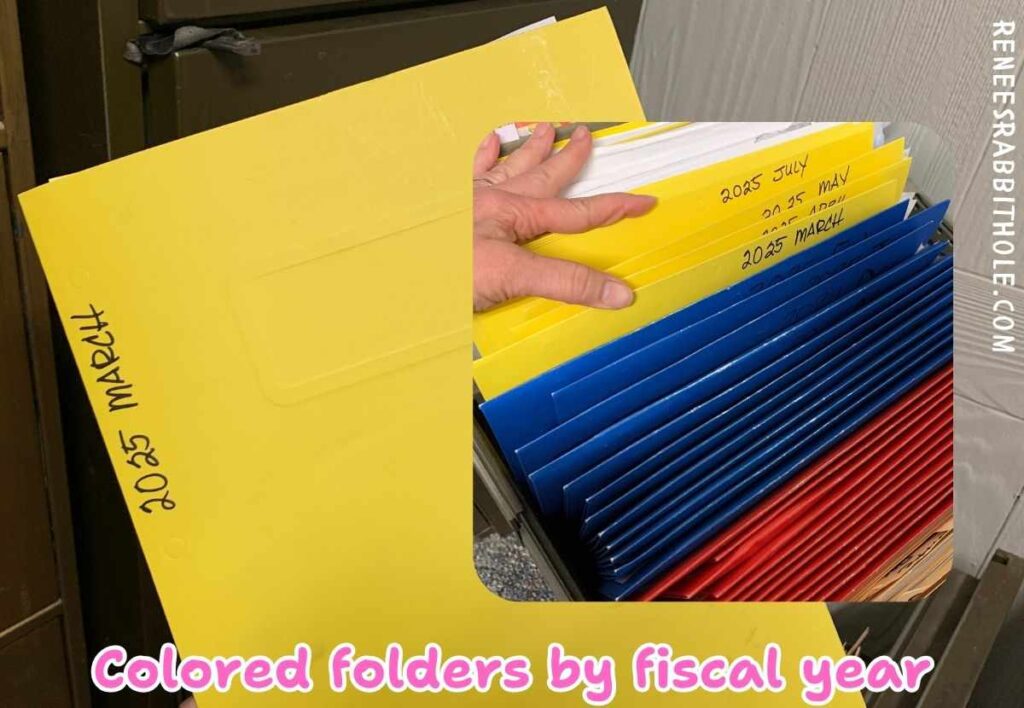
This system has worked like a charm for keeping track of the family business deposits and receipts. I buy these super-cheap folders – a dozen of the same color for each fiscal year.
You will note that I write the year and month on each, and inside I have a deposits and side to keep them separate.
These records are kept for 7 years, as per best practice for businesses.

Tax Paperwork
Just a quick tip about taxes, since that’s a big reason to hold onto receipts. I keep a bright folder marked “TAXES” in my office. Any end-of-the-year tax documents IMMEDIATELY get dropped into there.
The entire family is trained to do this, so when something comes in the mail, IT GOES HERE. I don’t know about you, but I don’t have time for miscommunication and endless hunts through my house and trash cans to find missing important paperwork!
Set a Routine to Organize Receipts (but Keep It Flexible)
Instead of organizing receipts daily (which can feel overwhelming), set a weekly or monthly reminder to review and sort them. Choose a time that works with your natural energy peaks—morning people might do better handling paperwork before noon, while night owls might prefer evenings.
I like to file my receipts while sitting on the couch at night while watching TV. If I have a few spare minutes, I’ll empty out my purse when it’s getting full.
I used to attempt a family budget, but that was overwhelming and I couldn’t keep it up. It’s vital that you don’t keep receipts if you don’t have to. Not all receipts have to be kept forever. I mean, you’re adding a lot of busy work to your life if you don’t have to!
The feeling of organizational success is a great one, if your system is making you feel defeated – change it.
-Renee’s Rabbit Hole
Side note: I keep one of the sprial pocket organizers just for the big purchases in my life, because I do want to hang on to those. Things like furniture, large appliance, special purchases, computers, etc. When you get my age, that conversation routinely crops up, “Now how much did we way for that?” or “Do you remember when we purchased it?” These receipts are kept forever or until I discard the item.
I mainly keep the personal receipts if I have to return something. In one case, my son had a pair of KEEN shoes that fell apart. The company had a solid warranty that he could have them replaced if the product failed, but he needed to upload a receipt to show proof of purchase.
You got it – I quickly located that receipt in one of my spiral pocket organizers – much to the shock and admiration of my family. ADHD brains aren’t always a hot mess!
Alternative Receipt Organization Methods
For physical receipts, try organizing them by broad categories instead of getting lost in too much detail. Use folders, envelopes, or binders labeled “Business,” “Personal,” “Groceries,” “Medical,” etc.
If you’re visually inclined, color-coding can help—assign each category a different colored folder or sticker. I feel that this is getting way to complicated. It really depends on your personal choice and needs.
My systems I have identified in this article are as simple as you can get. It makes me feel like I have my act together – because I do! The feeling of organizational success is a great one, if your system is making you feel defeated – change it.
Final Thoughts
Above all, pick a method that feels natural to you. If an ultra-organized filing system feels daunting, opt for a simple labeled folder. If digital scanning feels tedious, keep a designated “receipts box” to toss them in until tax season. The best system is one you’ll actually use.
No more receipt chaos—just a system tailored to your brain! Got other ADHD-friendly organizing tips? Share them in the comments below!