This is a tough one. We’re doing the best we can, trying to be kind to ourselves, and get through each day.
We’re well aware that we can frustrate our immediate family, the ones who know us best. They put up with us losing our keys, our little pile of messes, and overall disorganization.
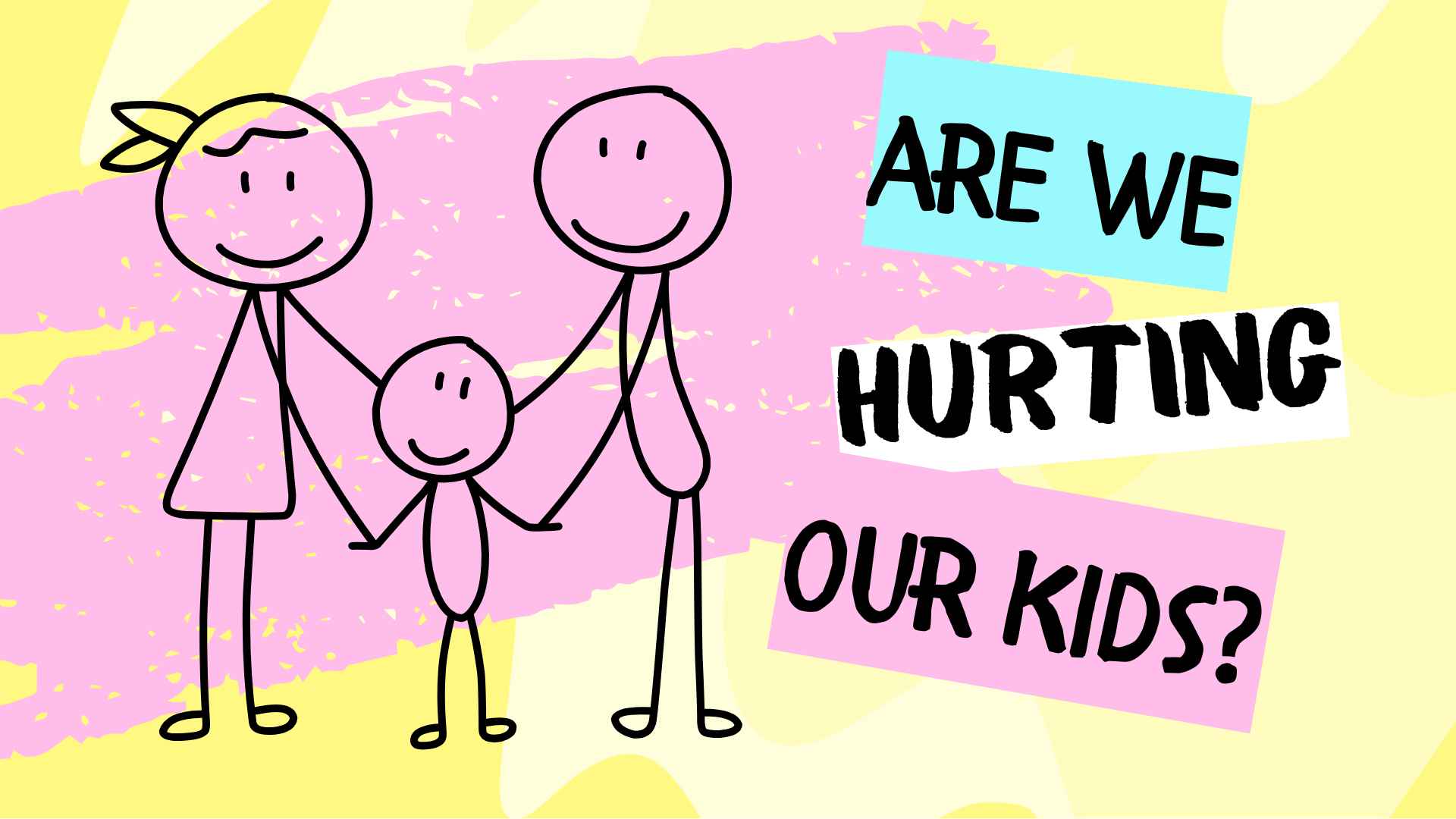
Despite working hard to overcome our shortfalls, there is a little pit of guilt in our stomachs. Is the way we’re wired, our ADD/ADHD slanted minds affect our kids?
Every parent should explore this, no matter what the scenario. A little self-examination can do a person good – let’s have that discussion.
FYI, there are tons of things you do right! Visit “The Joys of Being an ADD/ADHD Parent“ to learn about the benefits having an ADD/ADHD parent.
First, reality
It’s the natural way of the universe. We just have to find something to be down about ourselves. If it makes you feel better, if it weren’t for our disorganized brain stuff, our kids would find something else to fault us on.
There is plenty for our kids to be embarrassed or irritated about. Think of Elaine’s epic awkward dance from the Seindfeld sitcom. Just like her, some of us are completely oblivious to the impression we leave on others.
As they say, kids can be cruel. Their brains are not fully formed yet. Empathy, even for full-grown adults, comes from only the kindest of human beings.
It takes a very mature person to acknowledge the feelings of others. Being parents is a start of that growth. When caring selflessly for their children, the adult begins to see outside of themselves in a clearer way.
What we bring to the parenting table
The Youtuber “What in the ADHD?” offers wonderful insights for parents with ADHD. She emphasizes that parenting is more difficult for people who are neurodivergent due to a number of factors.
For example, people with ADHD have a lower stress tolerance and get overwhelmed easily. They are riddled with feelings of self-doubt and feelings they are not good enough. They continually question themselves if they’re a good parent.
Embarrassment creeps in because of being constantly disorganized, losing and forgetting things, and unable to keep a schedule. Forgetting important things like papers for school, picking up the kids at daycare, and packing lunch are cringeworthy episodes.
Emotional outbursts, blowing up something bigger than it is, and treating kids with impatience can be harmful to their children. She also highlights RSD (Rejection Sensitive Dysphoria) as an ADHD component that triggers some of the extra emotions.
We are not “one size fits all.” Sure, I’ve struggled with stress, overwhelm, and anxiety as a parent. I rarely forgot the big stuff, but it haunted me daily that I would (I only forgot my kid – once at Sunday school!).
Comparing ourselves to other parents doesn’t help. The truth is, even among our ADD/ADHD friends, there are different levels of having our act together.
Yes, our ADD/ADHD behavior can harm our children. But we can take action (like every neuro-typical parent) to be the warm and loving mom and dad our kids deserve.
Schedules: it doesn’t have to be this crazy!
Schedules are an ADD/ADHD parent’s nightmare. There is an enormous amount to track for elementary and high school kids.
I have to say what are these school administrators doing? Every minute of every day doesn’t have to be filled with activities. I firmly believe that there needs to be a parent backlash against the insanity of it all.
I remember a summer ball schedule that was reasonable enough. Then the coach proudly announced that they were able to add more games to the schedule. For shame. Why can’t kids just have a normal childhood of running through creeks and playing ball with the neighbors? This breakneck pace is wrong.
Some of you bring this on yourselves. Why are you choosing to make your kids travel on the weekends to club sports? Most of these kids are NOT getting college sports scholarships, sorry to say. Kids just want to have down time – please give your child their childhood back!
It’s so overwhelming and I’m always tired and stressed. So hard to set up a routine with my kids. I feel like a terrible mom.
Youtube Commentor
Actionable steps
Here is a list that touches on the more common struggles that parents with ADD/ADHD are having. Luckily, you can find strong support online to improve in these areas.
Schedules and appointments
Use timers and account for travel time. Future appointments? Not only set a timer on your phone for them, set a day, a week, even a month in advance to keep trickling the reminder into your brain (just don’t forget to set up the reminders!).
The “What the ADHD” youtuber Sydni suggests using Alexa for “announcements” such as in a countdown way (“bath in 30 minutes” then “bath in ten”). It’s good for both the parent and the child. Alexa can also be used for impromptu reminder (when you think of something you need to do/remember, you can yell it to Alexa without stopping what you’re doing).
Not everyone with ADD/ADHD is able to make planners and calendars work. Some find success with setting reminders with a Google calendar.
Personally, I’m obsessed with sticky notes. It is my low-tech go to. Use the platform/technology that you find the easiest to embrace.
Routines
Focus on routine over a perfect schedule, it takes away the stress of sticking to precise times. Routines will limit the tantrums and meltdowns. You might not be able to always keep the routine, but you will find returning to it lessens stress and anxiety for everyone.
Get things ready in advance, like the night before. Use the bedtime routine to talk about what the next day looks like and if there are any questions, comments or concerns about tomorrow.
Emotions and conflicts
The “What the ADHD” youtuber Sydni suggests that if your child has an angry outburst, get on their level and ask them how they are feeling. Her son didn’t want to talk about any issue when he was angry, but Sydni came up with a simple, “Are you mad because _______ this happened? Hold up 1 finger for ‘yes’ and 2 fingers for ‘no'”. Ingenious. She even takes it a step further by continuing the conversation with “are you sad or mad?” with the same finger technique.
Helping your children deal with their emotions helps them learn how to cope their entire life. Give them the feedback that it’s OK to feel the way the do, what they are experiencing is normal, and offer relatable examples from your own life. Acknowledges their feelings and that they are valid lets your children feel that you are listening to them and care.
I love that Sydni allows the child to cry it out, she doesn’t deny their feelings. I have told my kids, it’s OK to feel bad, even sorry for yourself for 5 minutes, and then move on. Sydni also encourages deep breaths and breaks (she is putting her personal experience to work). Teaching kids to regulate emotions is a great gift a parent can give their children.
Parenting is more difficult for people who are neurodivergent. For example, people with ADHD have a lower stress tolerance.
Youtube Channel: What in the ADHD?
Time out is another effective tool for stressed out parents when kids are doing things they shouldn’t be. It gives the parent the time to settle down, breathe, and not react out of stress and anger.
Standard parent operation procedures: use warnings. For example: Warning 1 to stop behavior, Warning 2 + specific punishment, Warning 3 = punishment. This is basic parenting 101, but with parents with ADD/ADHD it helps them to gain control over their own emotions.
Responding with sensitivity is a game changer. Avoid unnecessary and unexpected hurtful comments – you didn’t like it as a kid and they won’t either. I know, it takes a lot of self-control and mindfulness to stop blurting out a raw comment. THIS is what hurts your child. If you want to reduce the guilt and regrets, PAUSE AND REFLECT ON WHAT COMES OUT OF YOUR MOUTH.
One last piece of advice. If the other parent is able to handle some things better, turn it over to them! There is no shame in this, especially when your superpowers can be used elsewhere.
Clutter and organization struggles
I get that there is a spectrum from being in a “comfortably lived in” house to a “neat as a pin” one. In the extreme hoarder version, adult children share feelings of embarrassment living in such conditions. Others reveal that they could never have other kids over to their house because of the shame and hiding their secret life.
You may not be a hoarder, but a cluttered home can contribute to stress and anxiety in children. This manifests itself by affecting their ability to concentrate, sleep, and regulate emotions.
I always remember Christmas time growing up. My mom would say, “All I want for Christmas is a clean house!” Then she blackmailed us with that, saying we couldn’t decorate the Christmas tree until the house was clean.
We made it happen. What I forever carry with me is the feeling of peace while sitting in the parlor room of our midwest farmhouse, gazing at the lighted tree. It was a rare moment of control. I loved it.
I want to give that to my kids, I desperately do. What I have done is settle on a compromise (because life isn’t a Norman Rockwell painting!). The public parts of my house are under reasonable enough control. Then there are all my dumping spots that are not. They are contained, though!
Another point brought up is that our kids are missing out on the role modeling of how to clean, and how to organize. Maybe looking back to your own childhood, you might have missed out on that, and are struggling now.
If you are writing a little to-do list of self-improvement, I urge you to also make improvmeents in this area, for the sake of your kids. Do you know that living in a clean house can help them think better? It is important, and you even trying sends a message that you care about them.
Communication challenges
We are a role model for our children. Unfortunately, our erratic brains make it hard for our family to follow us. Bless them, they hang in there even if we’re doing some very impolite interrupting. They understand we are desperately trying to hang onto our thoughts. Heck, we even interrupt ourselves!
Holding on to our thoughts is frustrating to ourselves, most of all. I’ve written an article that gives tips on gaining control over this. There is no human out there that couldn’t stand a little improvement. Pick one out and give it a try (for your family’s sake!).
Conclusion
YOU are a great parent because you’re searching to become better – good for you! I hope this post left you feeling empowered, that you can become a better parent.
If you have tips that have worked for you, make sure to leave them in the comments below!
#inthistogether -Renee